How to Pronounce Pecan
How do you actually say the word pecan? There are a few words that seem to incur ongoing debates on their pronunciation — pecan is one of these words. Unlike most words and phrases with alternate pronunciations, the pronunciation of pecan is not strictly regional — in general, it appears to be up to individual preference on how the word is pronounced.
So, have you ever debated with someone on how to pronounce pecan? Is there a right or wrong pronunciation? Continue reading to find the insight you crave.
Where Does the Word Originate From?
To set the stage, the actual pecan nut originates from the American South and Mexico as a wild species of nut. The pecan is the only nut born and raised in the Americas. First discovered in the 16th century, the pecan continues to be one of the most valuable nuts you can purchase in North America.
The first people to harvest and cultivate pecans were the indigenous Native American tribes, particularly the Algonquian. The Algonquian people were located in North America, and more specifically within the forested areas around the Ottawa and St. Lawrence River, so they had access to many wild pecans.
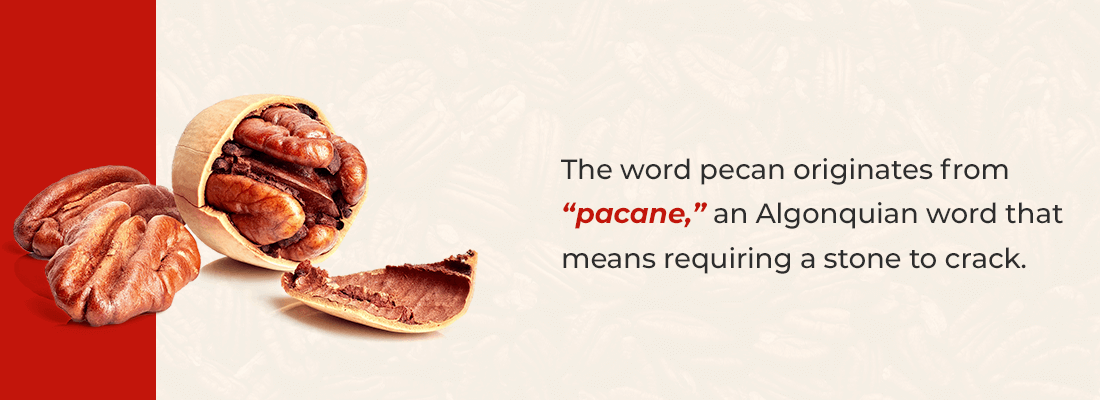
As for the actual word, pecan originates from “pacane,” an Algonquian word that means requiring a stone to crack. Compared to other native nuts, the pecan was one of the easiest nuts to crack, making it a fast favorite amongst Native Americans and European settlers.
In the rest of America, the pecan was first popularized in the early 1800s and the late 1700s. This is when the pecan started becoming a popular item within the industry to buy and sell.
Farmers and scientists began to experiment with which planting methods would produce the best pecans in the early 1800s. A South Carolinian scientist, Abner Landrum, was known for a budding technique that would combine two “better” pecan plants in order to create a hybrid new plant.
The ideal pecan is one that’s large and thin-shelled, and the first person to become more widely known for optimizing this pecan growing technique was a man named Antoine from Louisiana. Antoine was the first person to graft one of these ideal wild pecans into seedlings, giving him the title of the first person to plant an improved variety of pecan.
This research helped pave the way for the delicious pecans we harvest in the United States.
While pecan pronunciation has no effect on how irresistible this snack is, it’s interesting to explore. Learning how to say pecan is a fun way to learn about the nut. It also makes it easier to ask for this scrumptious snack in a store or offer pecans to a friend.
The most important factor when searching for pecans is to select them from a high-quality grower and harvester. This is how you find snacks with a perfectly soft and crunchy texture and the most exquisite flavor.
How Do You Pronounce Pecan?
The proper way to pronounce pecan is somewhat based on preference, and it can cause friendly debates depending on who you talk to. Throughout the United States, pee-KAHN is the most dominant pronunciation, followed shortly by PEE-kahn and PEE-can. The remaining usages include pick-AHN or some hybrid version of this pronunciation. The most common pecan pronunciation can change based on where you are and who you talk to. Here is a list based on location and popularity:
- pee-KAHN — most dominant phrasing nationwide
- PEE-can — most dominant on the East Coast
- pick-AHN — popular in areas like Texas, Oklahoma, Louisiana and Mississippi
- PEE-kahn — popular in areas like the Upper Peninsula of Michigan, Wisconsin and Northern Minnesota
What’s even more interesting is that people who prefer certain pronunciations will sometimes change how they say pecan when using it in certain compound words. For example, people do this when saying “pecan pie.”
The last, more unconventional pecan pronunciation is the scientific name, which is Carya illinoinensis. You won’t find many people bragging about their famous Carya illinoinensis pies, though.
Georgians and Pecans
Did you know that Georgia is the country’s largest pecan producer? As far as the pecan pronunciation debate goes, since Georgia is a southern state, most Georgians tend to pronounce pecan as pee-KAHN, or a hybrid version of this, like “puh-kahn” or “pih-kahn.”
As the largest producer of pecans due to its ideal climate for pecan trees, Georgia holds weight in this debate. However, there are a total of about 15 As the largest producer of pecans due to its ideal climate for pecan trees, Georgia holds weight in this debate. However, there are other states that have significant pecan industries.
Other than Georgia, these are the top states that also produce pecans:
- New Mexico
- Arizona
- Texas
- Oklahoma
Georgia produces about one third of the pecan harvest in the United States — weight-wise, this is about 88 million pounds of pecans. To put that in perspective, it would make about 176 million pecan pies.
Another great aspect of Georgia-grown pecans is that they can be purchased year-round! Georgians can enjoy their pecan pie and other recipes all year, while also providing pecans to surrounding states.
Where Does the Word Pecan Originate From?
It’s also interesting to understand where the word pecan originates from. The actual pecan nut originates from the American South and Mexico as a wild species of nut. The pecan is the only nut born and raised in the Americas. First discovered in the 16th century, the pecan continues to be one of the most valuable nuts you can purchase in North America.
As for the actual word, pecan originates from “pacane,” an Algonquian word that means requiring a stone to crack. Compared to other native nuts, the pecan was one of the easiest nuts to crack.
The pecan was first popularized in the early 1800s and the late 1700s. This is when the pecan started becoming a popular item within the industry to buy and sell.
Farmers and scientists began to experiment with which planting methods would produce the best pecans in the early 1800s. A South Carolinian scientist, Abner Landrum, was known for a budding technique that would combine two “better” pecan plants in order to create a hybrid new plant.
The ideal pecan is one that’s large and thin-shelled, and the first person to become more widely known for optimizing this pecan growing technique was a man named Antoine from Louisiana. Antoine was the first person to graft one of these ideal wild pecans into seedlings, giving him the title of the first person to plant an improved variety of pecan.
This research helped pave the way for the delectable pecans we harvest in the United States.
How Much Does Pronunciation Matter?
No matter how you pronounce the word pecan, most everyone will understand your meaning. And while pronunciation varies, America’s love for pecans does not.
To this day, pecans are one of the most popular nuts in the United States for baking, snacking and cooking. The rich, buttery taste complements a variety of salty, sweet and spicy flavor profiles. Include them in a trail mix or sprinkle on your morning bowl of oatmeal for an everyday treat, or have a rich and decadent candied or chocolate-covered pecan.
Experience the Delectable Flavors of Pecans From Pecan Nation
Pecans are a popular snack throughout the United States because of their convenience, irresistibly rich flavor and hearty nutrients. Eating pecans is a fantastic way to add more fiber, nutrients and antioxidants to your diet. They are also highly versatile, whether you snack on them throughout the day or add them to a mouthwatering recipe. It doesn’t matter how you pronounce pecan — it only matters that you select the highest-quality pecans for your pantry.
Pecan Nation offers a wide selection of pecan flavors to try, including Cinnamon, Roasted & Salted, Maple and Natural. Our families grow and harvest over 40 pecan varieties, and we carefully tend to our orchards so only the best pecans reach your table. Shop our online selection to try savory and sweet roasted pecans.